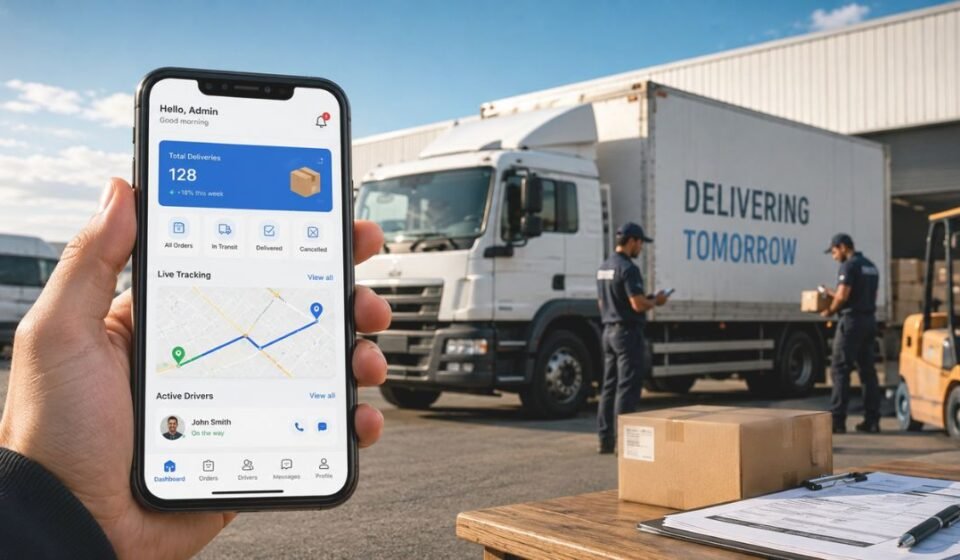

What Is a Logistics Mobile App?
A missed delivery or a driver stuck without directions these problems once slowed down logistics every day. A logistics mobile app was built to solve exactly this. It connects drivers, dispatchers, and customers on one platform, replacing phone calls and paperwork with live updates. Here is how this technology actually took shape over time.
History and Evolution
Logistics once relied on paper records and manual phone calls. Companies tracked shipments using spreadsheets and radio communication. The shift began when smartphones became common in the early 2010s. GPS chips inside phones allowed businesses to track vehicles without expensive separate hardware. As mobile internet speed improved, apps added live maps and instant notifications. This turned a simple phone into a full tracking device. Today, logistics apps use AI and automation to predict delays before they happen. This progress builds directly into the different app types used today.
Types and Categories of Logistics Mobile Apps
Different businesses need different logistics tools. Each app type solves a specific operational problem.
- Fleet Management Apps – monitor vehicle location and driver performance
- Last-Mile Delivery Apps – handle final delivery to the customer
- Warehouse Management Apps – track inventory and stock levels
- Freight Tracking Apps – manage long-distance cargo movement
- Dispatch Apps – assign orders to available drivers
Each of these app types depends on a shared set of core features to function well.
Core Features
A strong logistics app combines several tools into one system. These features work together to keep operations smooth.
GPS Tracking and Route Planning
GPS tracking shows the exact location of every vehicle and driver. This gives businesses full visibility into their operations. Route planning tools suggest the fastest path based on traffic and distance. This saves fuel and reduces delivery time.
Delivery Proof and Communication
Proof of delivery uses photos or digital signatures to confirm an order. This reduces disputes between customers and companies. Built-in chat or calling features connect drivers with dispatchers directly. This avoids delays caused by miscommunication.
AI and Automation
AI tools study patterns in traffic and delivery history. They help predict delays before they happen. Automated dispatch assigns orders to the nearest available driver, cutting down manual work for office staff. Our own team tested a similar dispatch system, and the feedback from drivers shaped several ideas covered in this guide.
Technical Architecture of a Logistics Mobile App
A logistics app usually has three connected parts. Each part serves a different user.
| Component | Purpose |
| Driver App | Shows routes, orders, and delivery status |
| Admin Dashboard | Lets managers assign tasks and monitor progress |
| Customer Interface | Allows customers to track their order live |
These three parts share data through a central backend system. This structure is what makes real-world use across industries possible.
Industries That Use It
Logistics apps support many industries beyond simple delivery. Each one uses the technology differently.
- E-commerce and courier services – rely on fast last-mile tracking for daily parcel volume
- Food delivery platforms – focus on speed and live rider location
- Freight and trucking companies – track long routes, fuel use, and driver hours
- Warehousing and manufacturing – use scanning tools to manage stock movement
- Emergency and relief operations – coordinate supply drops in urgent situations
This wide use across industries naturally translates into real business and customer benefits.
Benefits of a Logistics Mobile App
Logistics apps create value for every person involved in the delivery chain.
Benefits for Business and Drivers
Businesses reduce paperwork and gain better control over their fleet. This leads to lower operational costs. Drivers get clear routes and simple tools to update their status. This reduces confusion during their shifts.
Benefits for Customers
Customers can track their order in real time using a shared link. This builds trust and reduces support calls. Clear delivery timelines also improve overall customer satisfaction. Fewer surprises mean a better experience.
Development Challenges
Building a reliable logistics app is not simple. Developers face several technical and operational hurdles.
- Poor network signal in remote or rural areas, which can delay live updates
- Data privacy risks, since the app stores sensitive location and customer details
- System integration issues, especially when connecting with older warehouse or ERP software
Companies that solve these problems early tend to launch more stable apps with fewer complaints later on.
Latest Trends in Logistics Mobile Apps for 2026
Logistics technology continues to evolve each year. Newer apps focus on smarter, faster decision-making.
- AI-based systems that adjust routes automatically
- Predictive tools that flag delays before they occur
- Route planning designed to reduce fuel use and emissions
These trends show a shift from simple tracking toward smarter automation, which stands in sharp contrast to older traditional methods.
Comparison With Traditional Methods
Traditional logistics relied heavily on manual effort. Mobile apps replace most of this manual work with automation.
| Factor | Traditional Method | Mobile App Method |
| Tracking | Phone calls | Live GPS tracking |
| Route Planning | Manual guesswork | Automated optimization |
| Proof of Delivery | Paper receipts | Digital photo or signature |
| Communication | Delayed calls | Instant in-app chat |
This clear shift toward speed and accuracy also explains why certain myths about these apps still persist.
Common Myths About Logistics Mobile Apps
Some misunderstandings stop businesses from adopting this technology. Clearing these myths helps businesses make better decisions.
Myth: Only Big Companies Need It
Many assume logistics apps are built only for large fleets. This belief often stops smaller businesses from exploring the option.
Reality: Small Businesses Benefit Too
Small delivery teams also gain from better tracking and communication. Many apps offer simple plans built for smaller operations. A single driver or a small courier team can use the same core tools as a large fleet.
Myth: These Apps Are Too Expensive to Maintain
Some business owners believe ongoing app costs will outweigh the benefits. This assumption often comes from comparing it to old, one-time paper systems. In reality, reduced fuel waste and fewer lost orders often balance out the running cost over time.
Future Outlook
Logistics apps will likely become more automated in the coming years. Predictive routing may shift from a bonus feature to a standard expectation. Warehouse robots and smart sensors could soon connect directly with these apps, linking physical operations to digital tracking in real time. Voice-based commands and hands-free driver tools may also grow, making the app easier to use while on the road.
Conclusion
A logistics mobile app is no longer a bonus tool — it is becoming the backbone of modern delivery operations. It connects drivers, businesses, and customers on one simple platform. The companies that treat this technology as essential today will be the ones setting the pace for the industry tomorrow.
Disclaimer:
This article is for general informational purposes only and does not constitute professional or technical advice. Readers should verify specific app features or pricing directly with vendors before making a decision.
Read more topics on :Instamagazine.co.uk