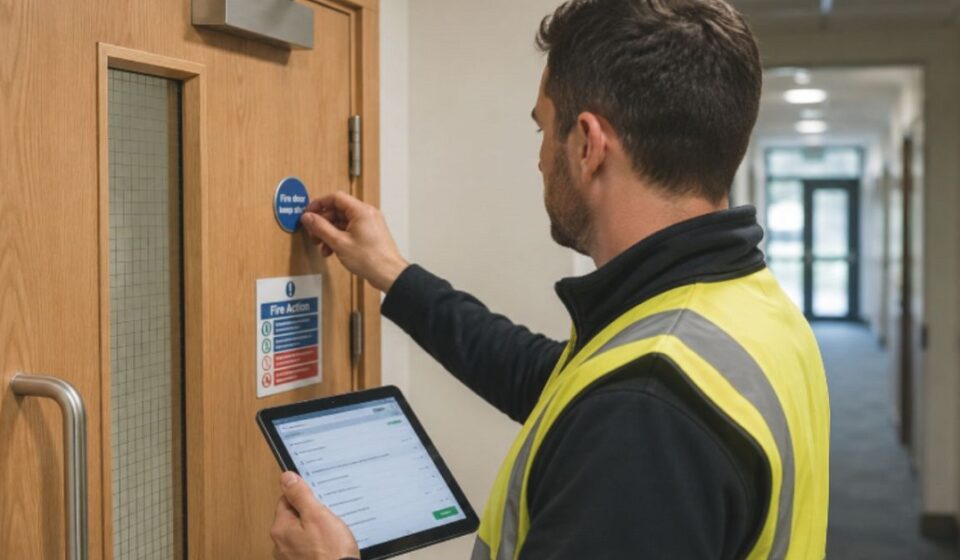

A fire door that looks fine can still fail in a real fire and no one finds out until it is too late. A fire door inspection app catches every hidden issue before it becomes a danger, turning a slow paper process into a fast, accurate, and fully documented safety check.
What Is a Fire Door Inspection App?
A fire door inspection app is a mobile tool that helps safety professionals check fire doors on-site using a phone or tablet. It guides the inspector through each check, captures photos, and creates a report automatically. The whole process happens in the field — no paperwork, no office typing.
The app stores all data in the cloud, so records are safe and easy to access anytime. Every inspection is linked to a specific door, which makes it simple to track history across visits. Building managers and safety teams use it to stay compliant and keep buildings safe.
What Does a Fire Door Inspection App Actually Check?
A fire door has many parts, and each one must work correctly. The app checks every component in order so nothing gets missed. Here is what each section covers:
Door Body and Frame Condition
The inspector checks the door surface and frame for cracks, holes, or warping. Any visible damage can reduce the door’s ability to hold back fire. The app lets the inspector mark the condition and attach a photo as proof.
Gaps and Clearances
Gaps around the door must stay within 3 to 4mm on the sides and top. A gap that is too wide lets smoke pass through. The app records exact measurements and flags anything outside the safe range.
Hinges and Self-Closing Device
Hinges must be tight and rust-free, with no missing screws. The self-closer must shut the door fully from any open position. If the door stays open or bounces back, the inspector marks it as a fail.
Intumescent Seals and Smoke Seals
Intumescent strips expand in heat to block fire at the edges. Smoke seals stop smoke from passing through the gap. The app checks both are present, undamaged, and properly fitted.
Latch and Lock Mechanism
The latch must catch fully when the door closes. A loose or broken latch means the door may not stay shut during a fire. The inspector tests this manually and records the result in the app.
Fire Rating Label and Signage
Every fire door must display a label showing its fire rating, such as FD30 or FD60. If the label is missing, painted over, or unreadable, the door cannot be verified as compliant. The app records the label status and allows a photo for the report.
Who Needs a Fire Door Inspection App?
| User Type | Why They Need It |
| Building Owners | To meet legal fire safety requirements |
| Facility Managers | To manage multiple doors across large sites |
| Fire Safety Officers | To produce accurate, compliant reports |
| Maintenance Teams | To track repairs and fix deadlines |
| Housing Managers | To inspect communal doors in apartment blocks |
| Inspection Contractors | To deliver professional reports to clients |
Anyone responsible for fire door safety in a building benefits from using this app. It removes the risk of missed checks and lost paperwork. Small teams and large organisations both use it to manage their inspection workload.
How Does a Fire Door Inspection App Work Step by Step?
Starting an Inspection
The inspector opens the app and selects the building and floor. Each door is listed by its ID or QR code. Scanning the code pulls up the door’s full history before the inspection begins.
Recording Findings on Site
The inspector works through the checklist section by section. Each item gets a pass, fail, or not applicable result. Photos are added directly to the relevant item, and notes can be typed or spoken into the app.
Generating the Final Report
Once all checks are complete, the inspector signs digitally and submits. The app builds a full PDF report within seconds. It includes the date, inspector name, door details, results, photos, and any required follow-up actions.
What Happens If a Fire Door Fails Inspection?
Common Reasons a Door Fails
- Damaged or missing intumescent seal
- Gap wider than 4mm on sides or top
- Self-closer not shutting the door fully
- Fire rating label missing or unreadable
- Loose or broken hinge
- Latch not catching on close
What Actions Must Be Taken After a Fail
A failed door must be repaired before it can pass. The responsible person must arrange the fix as soon as possible, especially in high-risk buildings. In some cases, the door may need to be taken out of use until it is repaired.
How the App Tracks the Fix
The app creates a task automatically when a door fails. The task is assigned to a team member with a due date and reminder. Once the repair is done, the inspector returns, re-inspects the door, and closes the task in the app.
How Often Should Fire Door Inspections Be Done?
In the UK, communal fire doors in tall residential buildings must be checked every three months. Flat entrance doors in the same buildings require a check every twelve months. These requirements come from the Fire Safety (England) Regulations.
In the US, NFPA 80 requires at least one documented inspection per year for all fire door assemblies. High-risk buildings such as hospitals or schools may need more frequent checks. Always follow local fire codes, as requirements can vary by region.
Common Mistakes People Make During Fire Door Inspections
Many inspectors focus only on visible damage and miss smaller issues like worn seals or stiff closers. Skipping the gap measurement is a common error that leads to doors passing when they should fail. These small oversights add up and reduce the door’s effectiveness in a real fire.
Another frequent mistake is not photographing every failed item. Without photos, there is no clear proof of the issue, which makes it harder to prioritise repairs. The app prompts for photos at each fail point, but inspectors sometimes skip this step when in a hurry.
Finally, many teams complete the inspection but delay fixing the issues. A report with open fails that are never closed creates a legal and safety risk. Using the app’s task tracking feature ensures every problem gets assigned, followed up, and resolved on time.
The mistakes mentioned in this section are based on real experiences shared by our inspection team. Their on-ground insights have helped shape this guide to make it as practical and accurate as possible.
FAQs
What is the main purpose of a fire door inspection app?
A fire door inspection app helps safety professionals check fire doors on-site, record findings with photos, and generate reports automatically. It fully replaces paper-based inspection methods.
Can a fire door inspection app work without internet?
Yes, most apps work offline and sync all data to the cloud automatically once the connection is restored.
Who is responsible for fire door inspections in a building?
The building owner or designated responsible person is legally required to ensure fire doors are inspected regularly.
What happens if a fire door fails an inspection?
The app creates a repair task automatically, assigns it to the right person, and re-inspection is done after the fix is completed.
How often does a fire door need to be inspected?
In the UK, communal doors need checks every 3 months. In the US, NFPA 80 requires at least one inspection per year.
Final Verdict
A fire door inspection app saves time, reduces errors, and keeps building records organised in one place. It guides inspectors through every check, captures evidence, and produces reports in seconds. For anyone managing fire door compliance, it replaces a slow and unreliable paper process with something fast and accurate.
The app also creates a clear audit trail that holds up during official inspections or legal reviews. Every visit, finding, and repair is recorded and timestamped. That level of documentation is very hard to achieve with manual methods.
If fire door safety is part of your responsibility, using an inspection app is not just convenient — it is a smarter and more reliable way to do the job right.
Disclaimer:
This article is provided for general informational purposes only and should not be considered legal, regulatory, or professional fire safety advice. Always consult qualified fire safety professionals and follow applicable local regulations, standards, and building codes when conducting fire door inspections.
Read more topics on :Instamagazine.co.uk